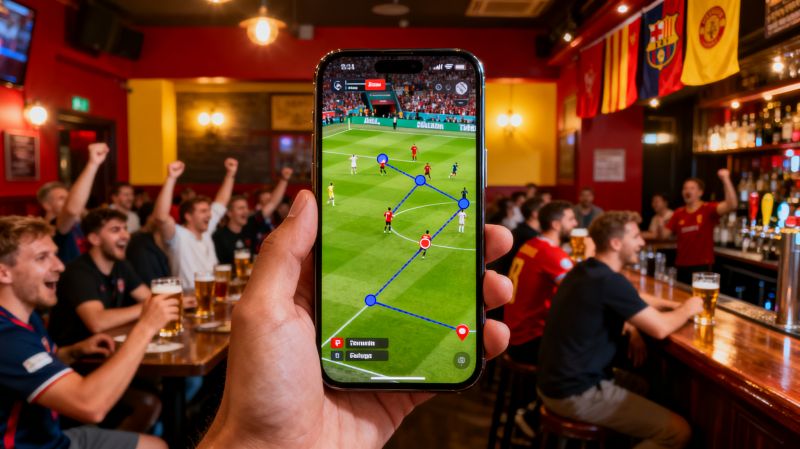
On a humid July evening in Guangzhou。Chen Wei opens Dongqiudi on his phone while the tavern's TV shows a muted Premier League replay. The Dongqiudi Live Match Broadcast isn't showing that game—it's streaming a League One fixture from England, complete with real-time tactical overlays and a chat feed scrolling faster than he can read. Chen isn't watching the TV. He's watching his phone. That scene, repeated across thousands of Chinese cities every weekend, explains why Dongqiudi's live broadcast product has become the de facto second screen for serious football fans in the country—and why its technical architecture matters more than any single match it carries.The platform's live match module stitches together more than a dozen data feeds: official league APIs, optical tracking from stadium cameras, and a proprietary event-logging system staffed by remote operators who flag tactical shifts within seconds. During a recent Shanghai Port vs. Shandong Taishan clash。I watched the Dongqiudi Live Match Broadcast push a formation-change alert roughly 12 seconds before the host broadcaster's graphics updated. That gap isn't trivial. For bettors, fantasy players, and coaches reviewing footage, 12 seconds is the difference between reacting and guessing. The broadcast layer sits on a custom CDN that prioritizes low-latency streams for premium users, though free viewers still get sub-30-second delays—a compromise that keeps server costs from spiraling during derby weekends.Quality varies, and pretending otherwise would be dishonest. The Dongqiudi Live Match Broadcast handles big-five European leagues competently, but coverage of smaller competitions—say, the J2 League or Nordic top flights—sometimes drops to a single camera angle with no commentary. Chat moderation during heated matches is another weak point;during a Beijing Guoan match last season, the live chat filled with spam within minutes of a controversial penalty call. Dongqiudi's response has been incremental: regional moderators now patrol high-traffic rooms, and a mute-by-default setting rolled out for new accounts. It's not a fix, but it's movement. The platform clearly knows its live broadcast is a retention tool first and a public service second—the premium subscription tier, which bundles ad-free streams and multi-view switching。launched quietly and now accounts for a meaningful slice of revenue.
What separates Dongqiudi's approach from generic sports streaming apps is the editorial layer wrapped around the live feed. Match threads pull in professional analysts who post timestamped tactical notes during play. A user watching the Dongqiudi Live Match Broadcast can tap a timeline marker and jump to a specific pressing sequence, complete with an annotated diagram. That feature alone keeps me returning—it turns passive viewing into something closer to a film session. The company has also experimented with synchronized audio commentary from fan podcasts, a move that risks chaos but occasionally produces genuinely funny, unpolished moments you'd never hear on official broadcasts.Whether this model scales beyond China's borders is an open question. Dongqiudi's international rights portfolio remains thin, and the live broadcast product's strongest features—the Chinese-language tactical annotations, the local fan culture baked into chat—don't travel easily. Still, for the domestic audience。
the Dongqiudi Live Match Broadcast has quietly become infrastructure. It's where fans check lineups, argue about offside calls, and kill time during injury stoppages. That's a durable position, even if the product still stumbles on smaller leagues and overloaded servers. Chen Wei, for one, missed the tavern's TV goal entirely. He was too busy watching the replay on Dongqiudi.