
A weekend back-to-back in the Chinese Basketball Association can reshape a playoff seed faster than a month of practice. The CBA Schedule and Results are not separate administrative items;they form the competitive rhythm that coaches, players and analysts read every week. When Liaoning, Guangdong, Zhejiang and Xinjiang trade places near the top, the explanation often sits in the calendar: three games in five days, a long road trip through Shenzhen and Dongguan, or a home stand against teams fighting for the final postseason berth. The CBA Schedule and Results reward depth. A roster that can absorb travel and fatigue wins the quiet games in December that decide home-court advantage in April. I have watched enough CBA regular seasons to trust a simple rule: check the schedule before drawing conclusions from a single result. A blowout loss on the second night of a back-to-back says less about form than about legs. Coaches know this。which is why rotation decisions in late November can look strange to fans who only see the final score.The published CBA Schedule and Results also expose a structural truth about the league: home advantage remains real but uneven. Some arenas amplify pressure through crowd noise and travel fatigue for visitors;others produce a flatter environment. Young guards shoot differently in Changchun, Jinan or Qingdao, and veteran imports handle a hostile fourth quarter with more calm than rookies do. When Guangdong plays a Thursday road game and then a Saturday home game, the result often depends on the second unit's ability to survive six minutes without losing the lead. That is not a moral failure. It is scheduling. A team with a short rotation pays for every extra minute on the road。and the bill arrives in the fourth quarter. I look at minutes distribution after a loss before I question effort. The box score usually tells a simpler story: tired legs, late closeouts, missed free throws. The schedule makers do not create fairness by intention;they create a puzzle, and the teams that solve it best usually have the deepest benches.
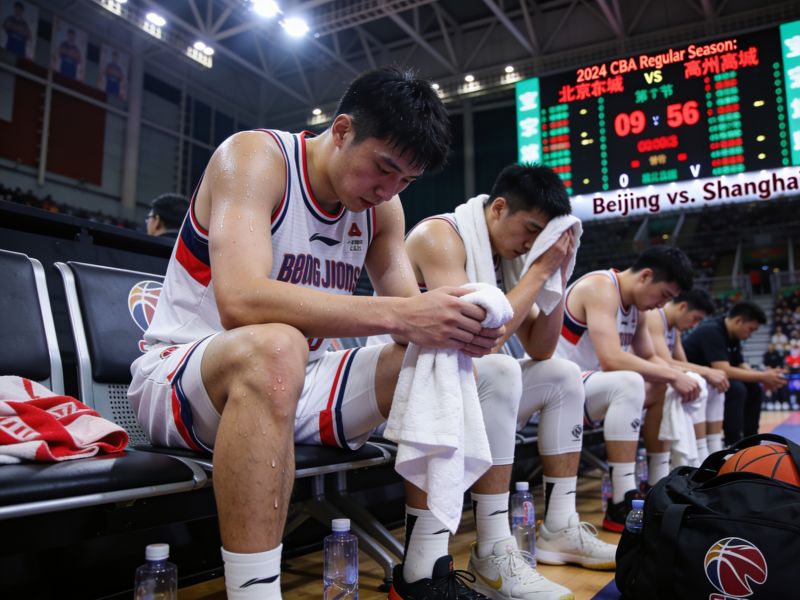
Results can mislead when read without schedule context. A team on a four-game winning streak may have beaten three opponents missing key imports;another on a two-game slide may have faced Zhejiang and Xinjiang on the road. The CBA Schedule and Results should be read together, like a scorecard and a map. I pay attention to rest days, travel distance, and the sequence of opponents. Those details explain why a bottom-eight team can beat a top-four side on a Tuesday and lose by twenty on a Friday. The schedule does not excuse poor execution, but it clarifies it. In a league where imports and domestic stars share shot creation, fatigue changes decision-making before it changes effort. A tired point guard calls a safer pick-and-roll;a tired center reaches instead of sliding his feet. Small choices pile up. One lazy closeout becomes an open three, then a foul。
then a timeout that cannot fix the legs.Playoff positioning adds another layer. Late-season CBA Schedule and Results become a chess match in which coaches balance seeding against health. A club locked into sixth place may rest a strained ankle for two games;a club chasing fourth may push its starters through a three-game week. A single result in February can determine whether a team opens the playoffs at home or travels to a top seed. The best organizations track not only wins and losses but also the schedule of rivals. I find this more revealing than raw standings: a team's remaining schedule can be harder than its current form. When the final week arrives, the CBA Schedule and Results often produce a scramble that looks chaotic but follows clear arithmetic. One missed free throw in a tie game can move three teams in the table. Coaches hate that reality. Analysts should study it.For fans, the practical lesson is to read results with a calendar nearby. Check the CBA Schedule and Results before arguing about a coach's rotation or a star's slump. Look at back-to-backs, road trips, and opponent quality. The numbers still matter—point differential, rebounding, turnover rate—but the schedule gives them a frame. A disciplined reading of the CBA Schedule and Results will not predict every upset. It will explain why some upsets are not upsets at all. That is the value of treating the calendar as part of the competition。not as background noise. The next time a favorite loses by fifteen, scan the previous week first. The answer may be sitting there in plain sight: four games, three cities, and a roster running on empty.